1000 FAQs, 500 tutorials and explanatory videos. Here, there are only solutions!
Add or remove a password from an email address
This guide explains how to manage the password(s) of an existing email address on Infomaniak.
Preamble
- If you cannot log in to the Manager or Mail / my kSuite, you will not be able to manage the passwords of any of your email addresses: refer to this other guide in this case.
- Changing the password of an email address means changing the IMAP / SMTP password: as soon as the password is changed, you must update your software (Outlook, etc.), mobile devices (iPhone), etc. with the new password (this is your responsibility).
Set a password for an Infomaniak email address
Prerequisites
- Order a Mail Service from Infomaniak.
- Create one or more addresses on this Mail Service.
- Be Administrator or Legal representative within the Organization.
To set a new password or add an additional password to an existing email address on your Infomaniak Mail Service:
- Click here to access the management of your product in the Infomaniak Manager (need help?).
- Click on the product name concerned.
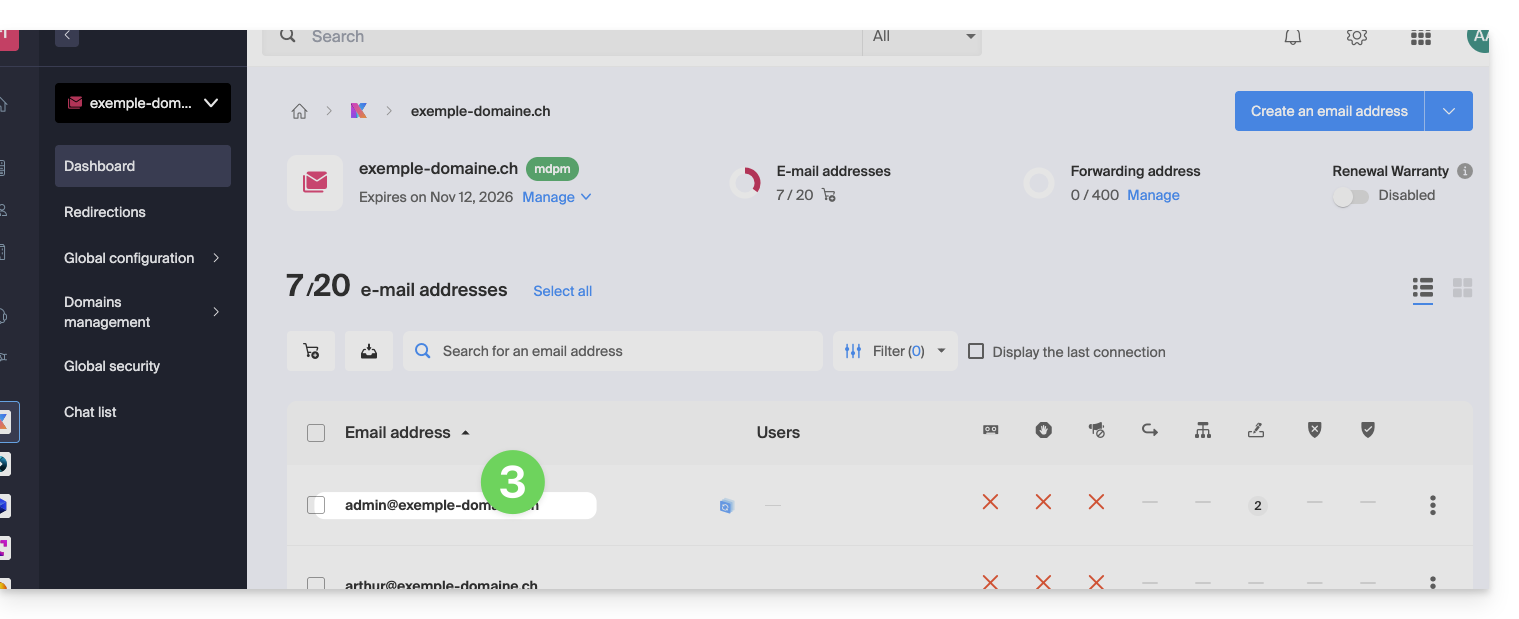
- Click on the email address concerned in the table:
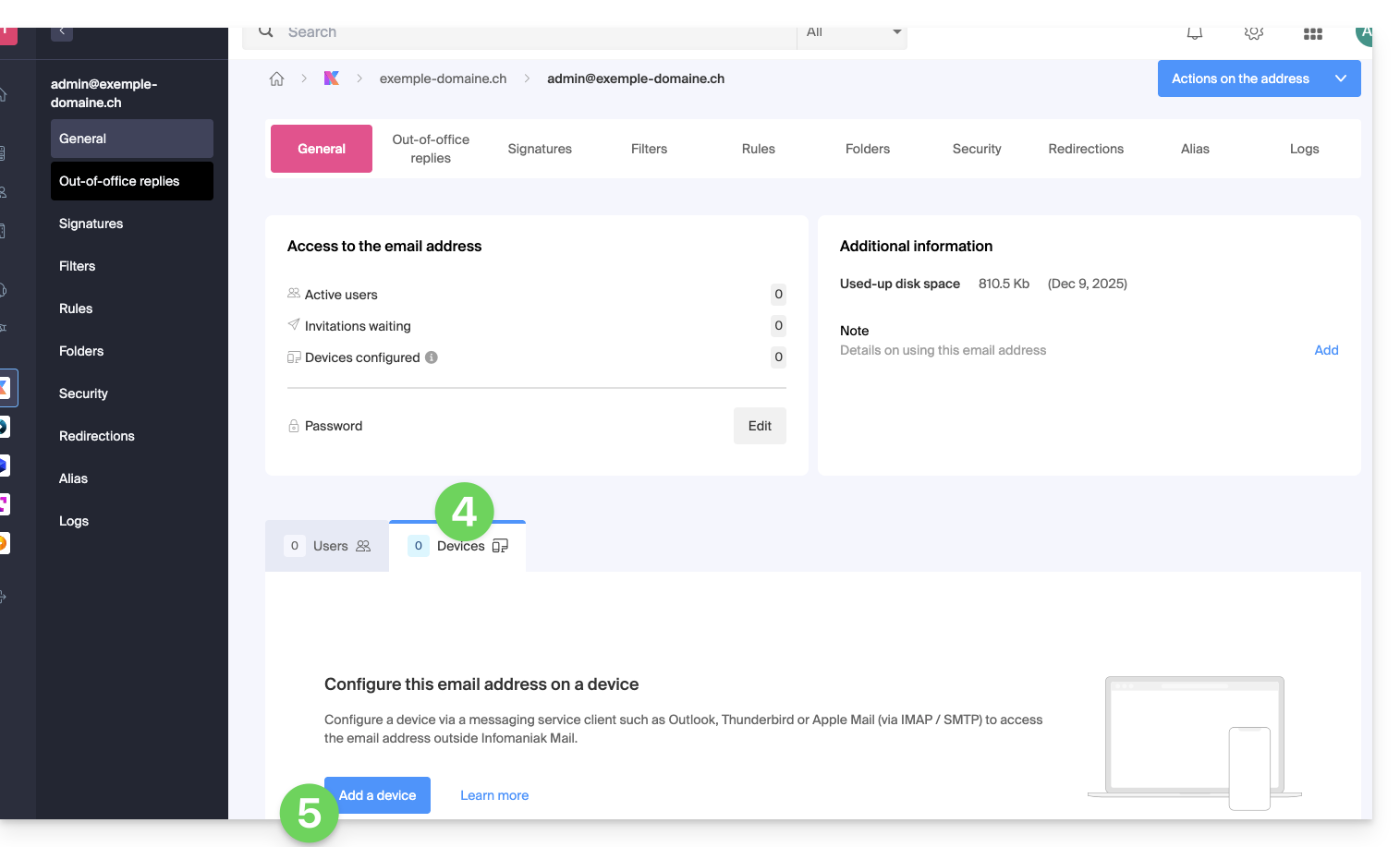
- Click on the Devices tab.
- Click on the button to Add a device:
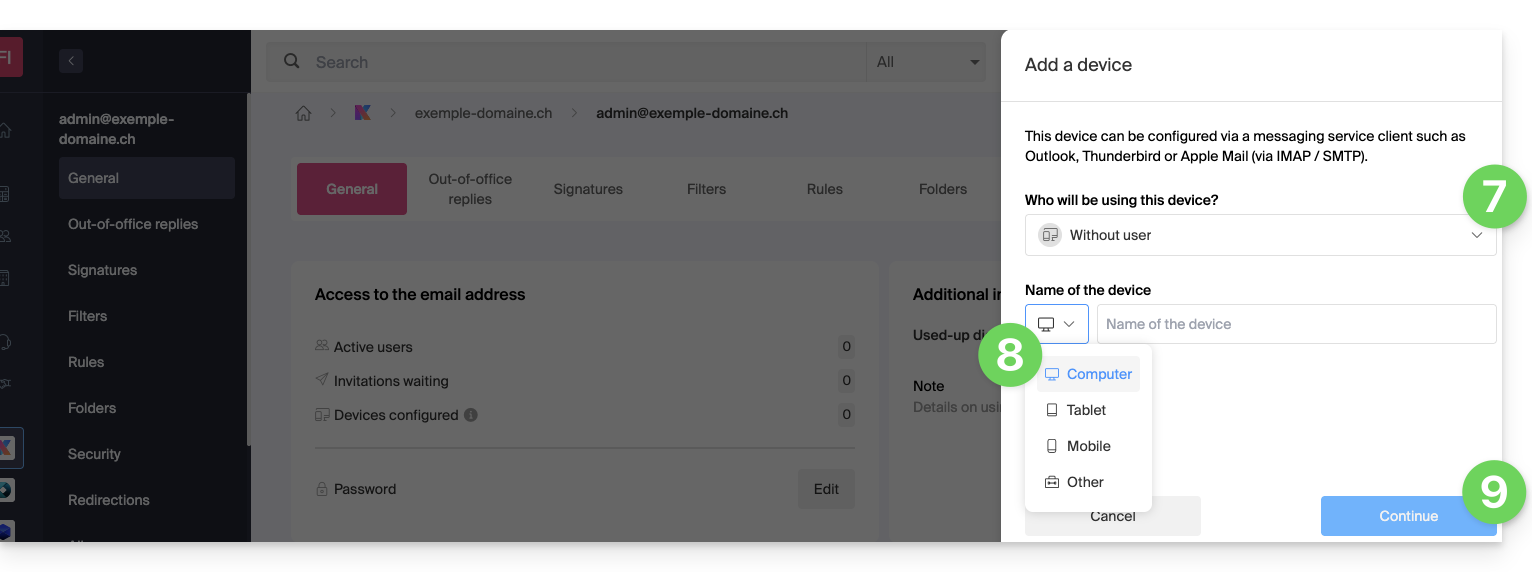
- Enter the password to log in to your Infomaniak account if necessary.
- Then in the drop-down menu, choose No user.
- Choose an icon and a descriptive name for your device that requires the password.
- Click on the button to Continue:
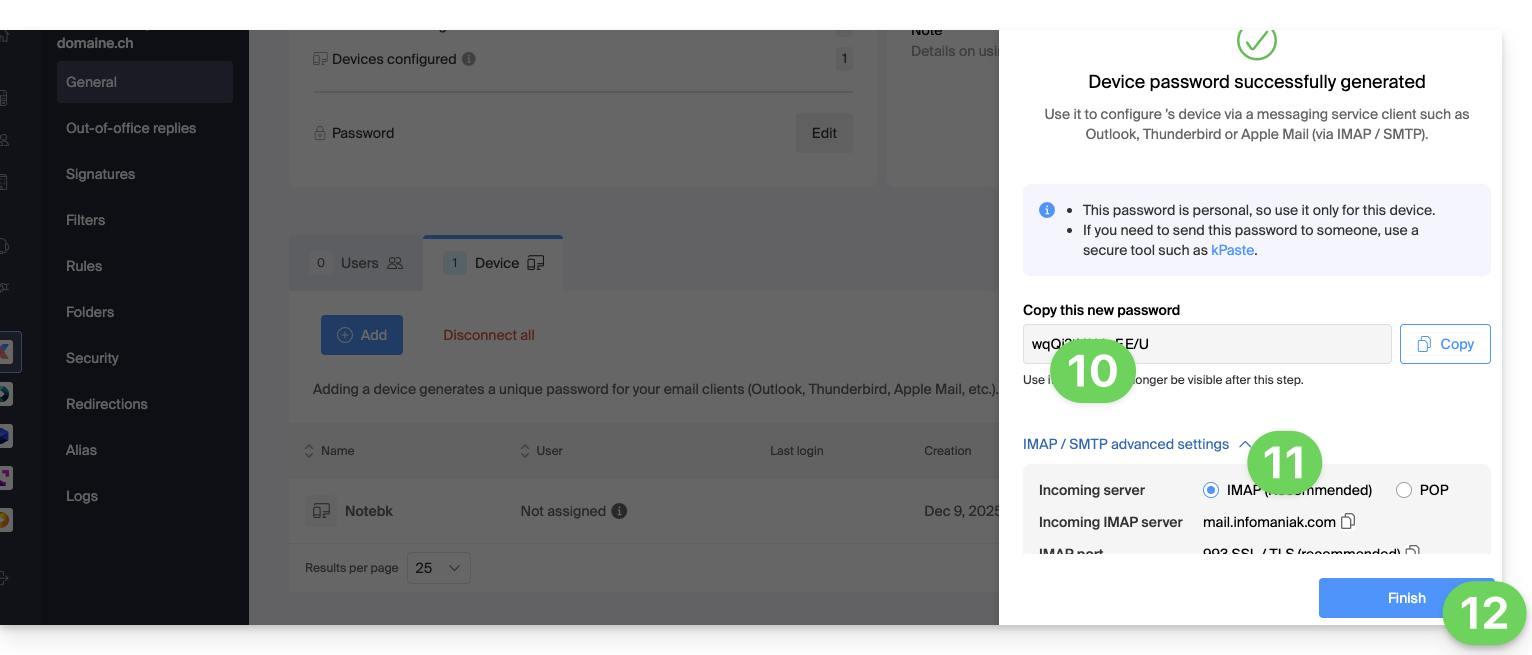
- The new password created is displayed, you can copy it and keep it safe (password manager, for example); it will no longer be displayed afterwards.
- Click to display, if necessary, the recommended messaging parameters.
- Click the button to Finish:
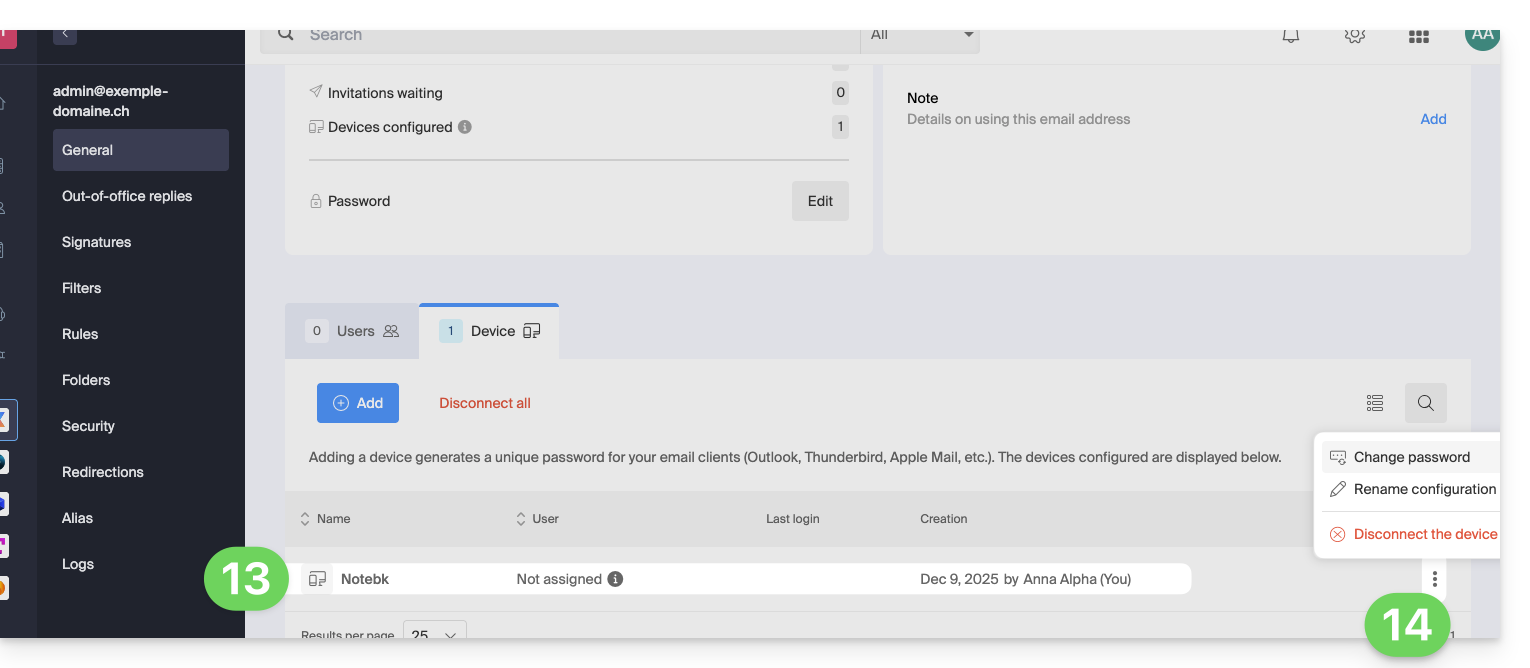
- The new device appears in the list with the information about the user who created it (you) and its creation date.
- The action menu ⋮ located to the right of the item in question allows you to randomly generate a new password for this device, or to cut its existing connection (read the chapter on this subject further down in this guide) by removing it:
Create a password for a user
Instead of creating a password yourself and having to communicate it to the user later, you can directly allow a user who does not have as many permissions as you to obtain the password for the device they need:
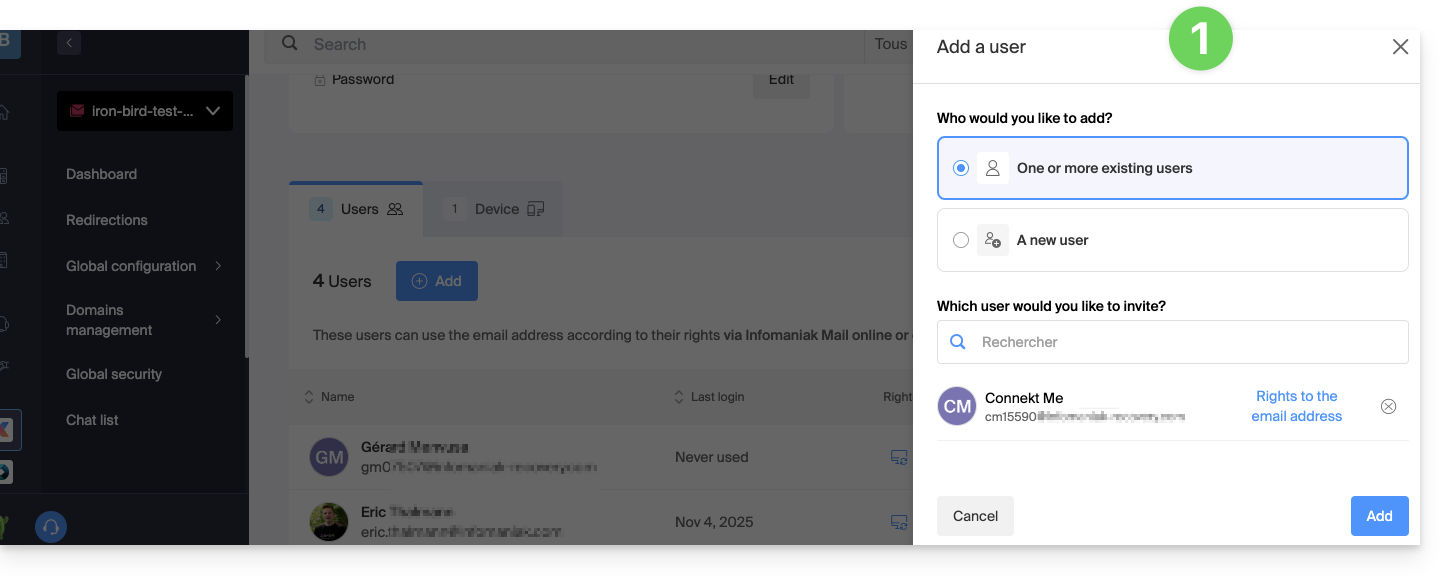
- Add the new user (existing in the Organization or not) as described in this other guide:
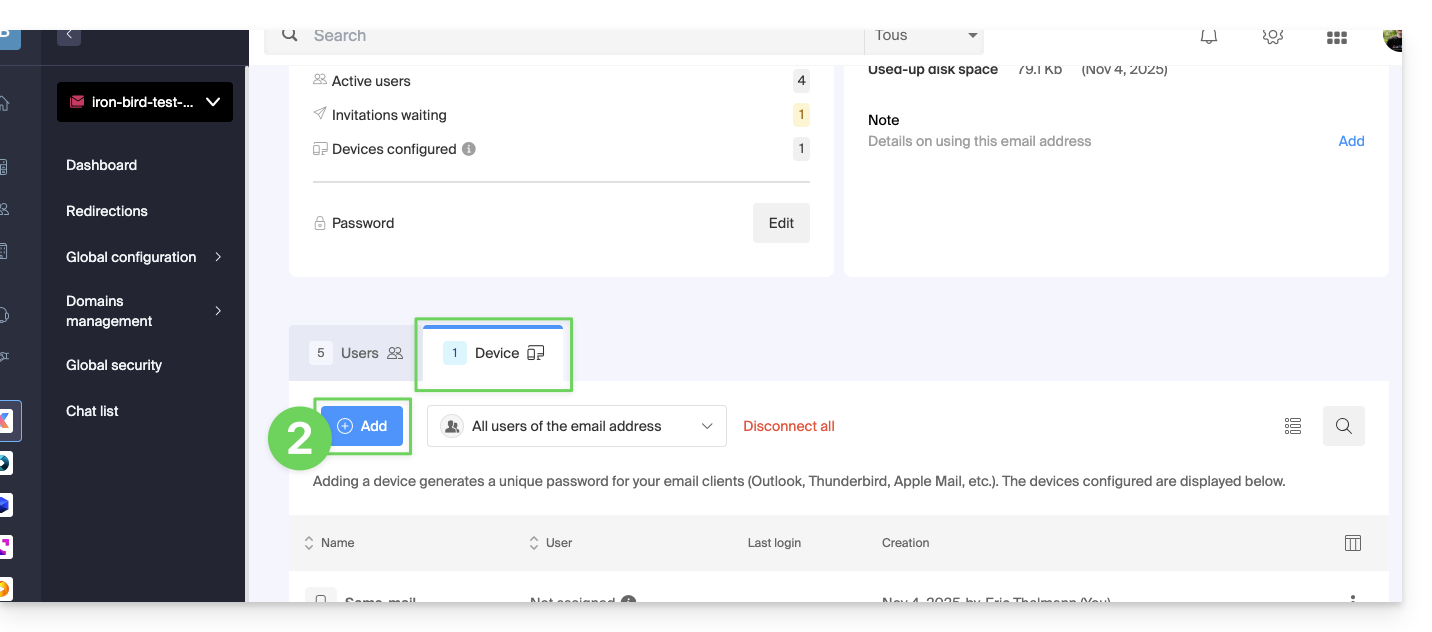
- Once the user is added, switch to the devices tab to add a new device:
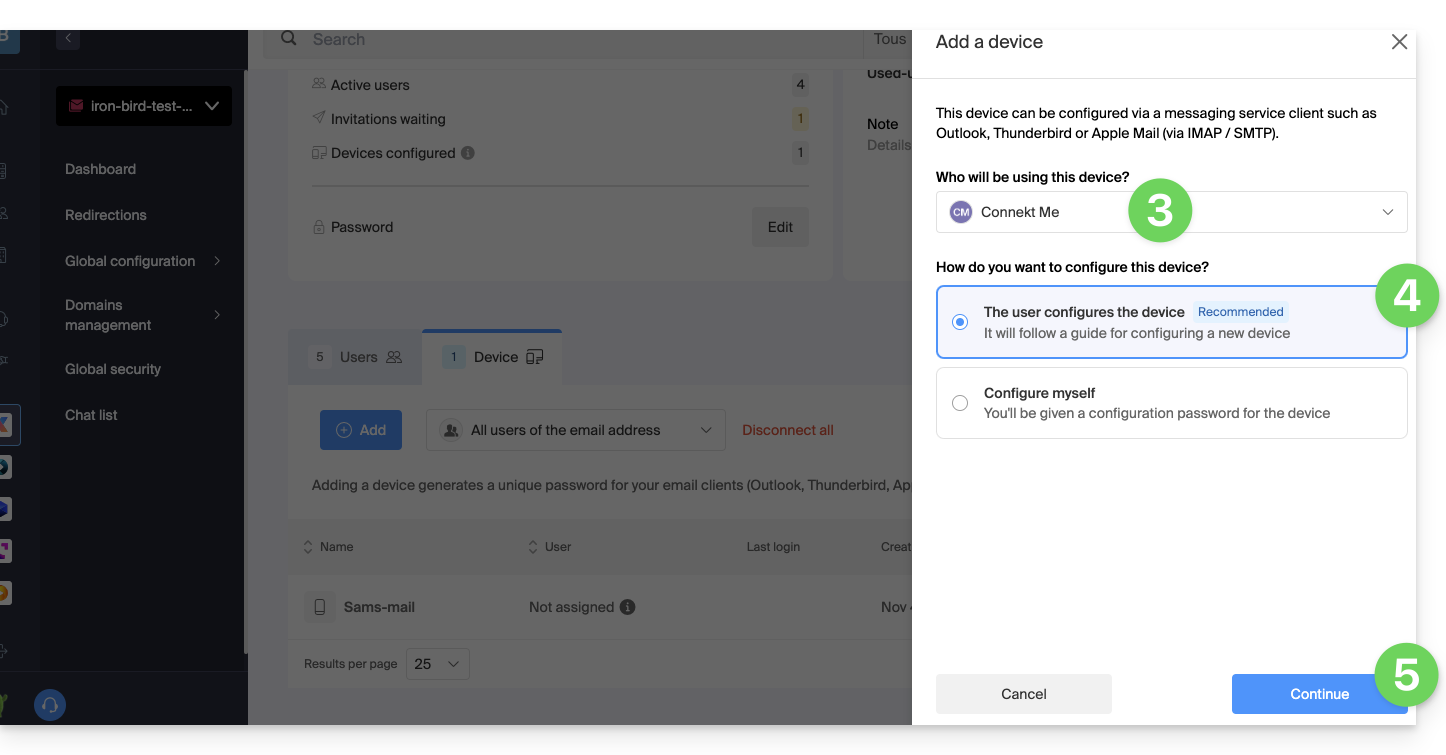
- Enter, if necessary, the password to log in to your Infomaniak account and then select the user created in step 1.
- Click on the first option to send a setup assistant for the user's device.
- Click the Continue button:
- Copy the invitation link valid for 30 days to be sent to the user.
- If necessary, send the invitation to the user's email address:
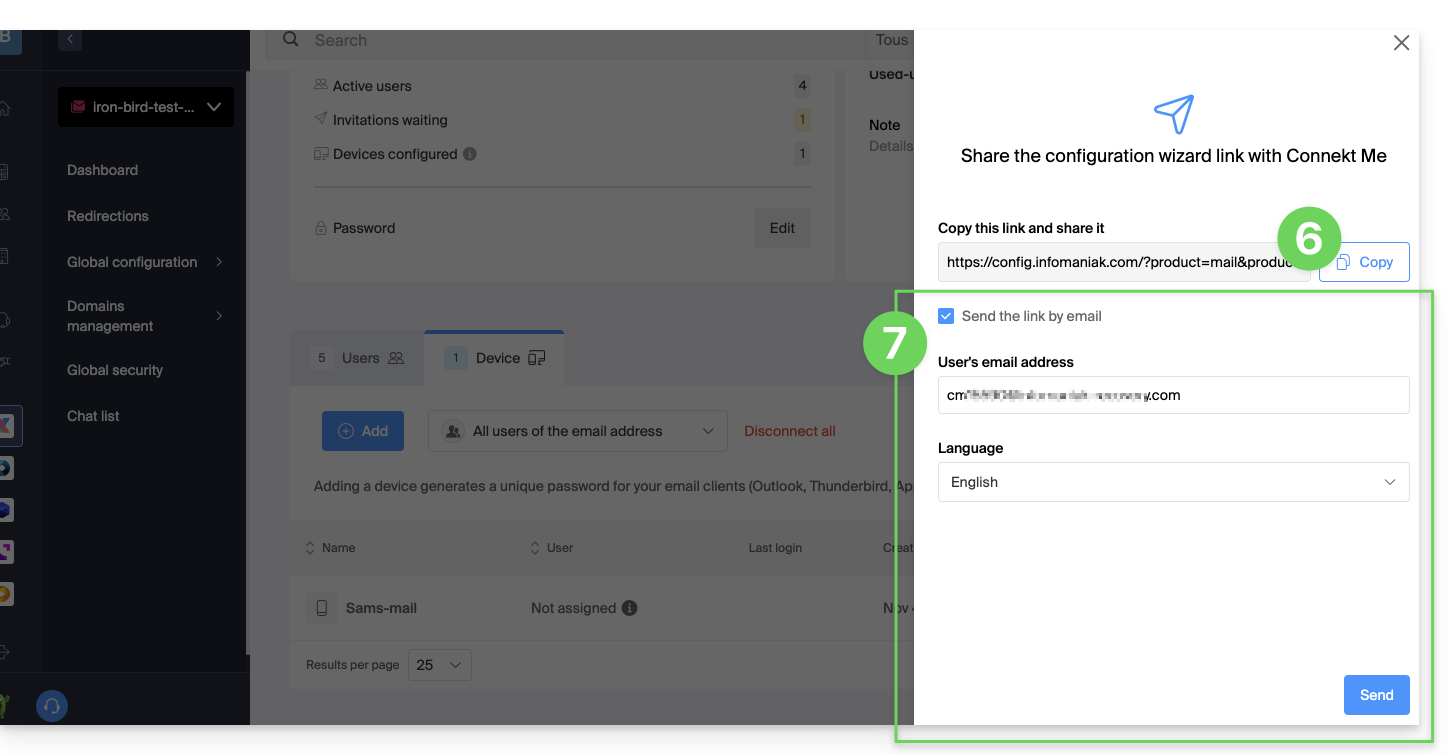
In point 4 above, you can also choose to generate a password:
- The created password will be displayed, you can copy it and keep it safe (password manager for example); it will no longer be able to be displayed afterwards.
Reset/remove device password(s)
In order to cut any current IMAP/POP/SMTP connection that is being made thanks to a password generated on this interface (this does not remove the address of the Infomaniak Mail Web App (online service ksuite.infomaniak.com/mail) — you need to administer the users of the email address for this), it is possible to revoke a device, or even delete all existing configurations in 1 click:
- Click here to access the management of your product in the Infomaniak Manager (need help?).
- Click on the product name concerned.
- Click on the email address concerned in the table:
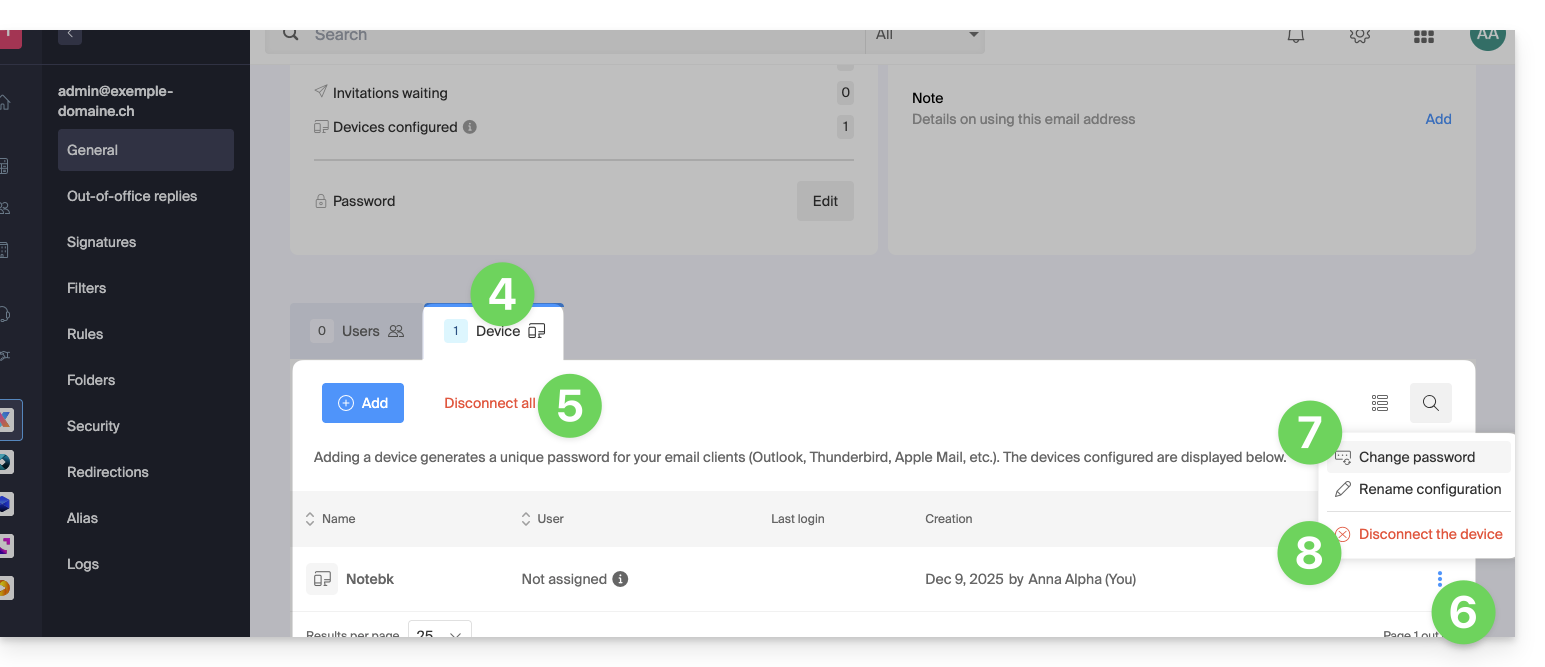
- Click on the Devices tab.
- Click on the red link to disconnect all registered devices (confirmation is required).
- Click on the action menu ⋮ located to the right of the device in question.
- Click on “Change password” to cut the current connection but allow the device to reconnect with a new password directly.
- Click on “Disconnect the device” to remove it from the list and delete the corresponding connection: