Knowledge base
1000 FAQs, 500 tutorials and instructional videos. Here, there are only solutions!
Discover the vulnerability detection tool
This guide presents the vulnerability detection tool for your Web Hosting.
Introduction
- There are thousands of cyber threats, and if your website were to be infected, your business could suffer, not only due to its unavailability, but also due to the loss of trust from your visitors and customers.
- The tool offered by Infomaniak is a free protection that complements the antivirus and protects all Infomaniak hosting solutions against malware and security vulnerabilities.
- Infomaniak ensures the protection of hosting by exclusively analyzing the files of websites (webroot); no other synchronous scan is performed on the rest of the hosting.
How this service works
The tool works in the background to detect potential security issues. These vulnerabilities could allow malicious individuals to alter the content of your websites, which could harm your reputation with your customers and search engines.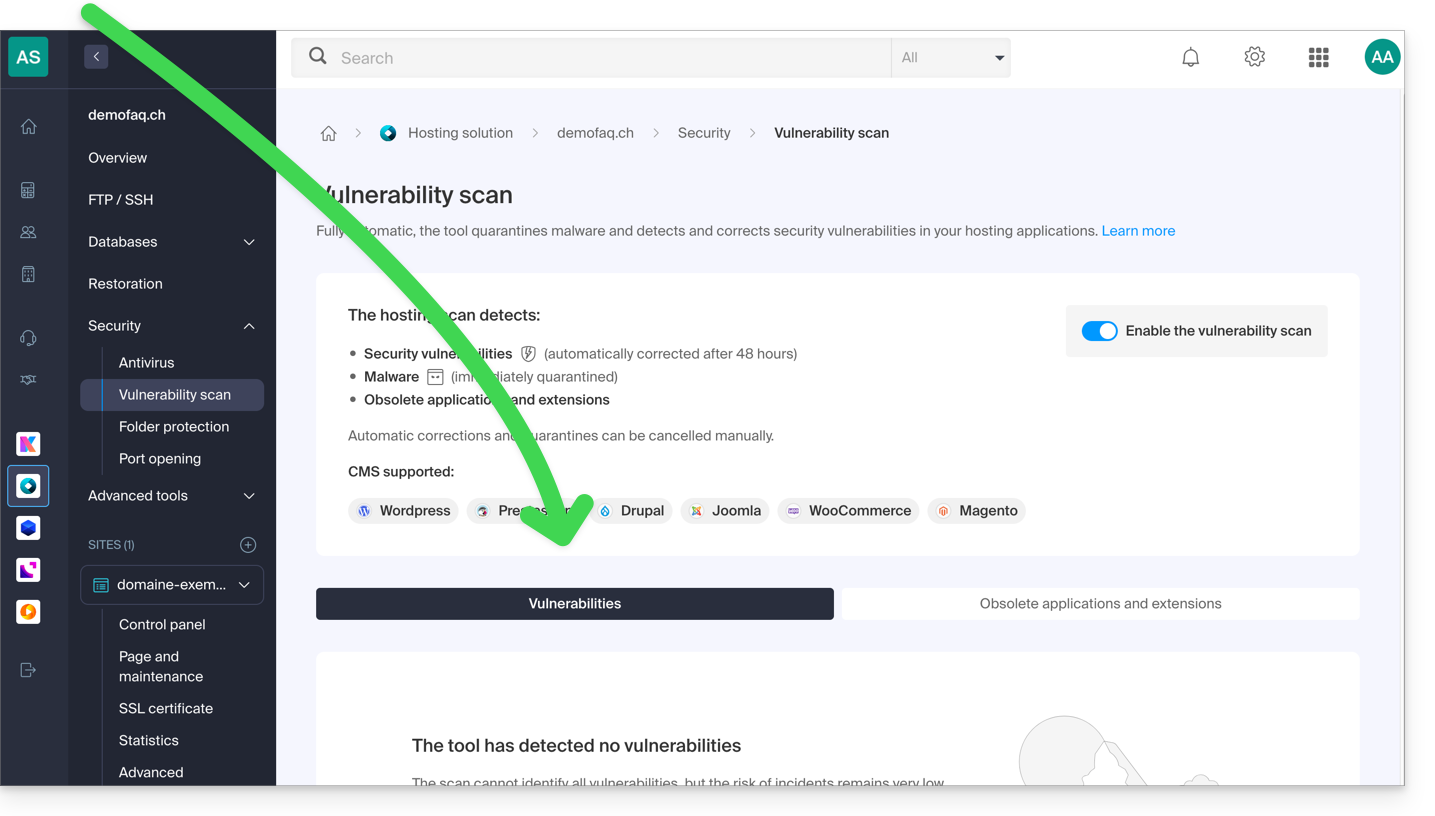
If no action is taken on your part within 48 hours of detection, the tool automatically fixes security vulnerabilities in most CMSsand/or quarantines malicious software, without affecting the proper functioning of your websites.
If necessary, you can:
After a detection, it is recommended to check your entire hosting environment, especially if you notice any suspicious changes that the protection may not have detected automatically.
A second tab allows you to analyze and display outdated applications and extensions on your hosting: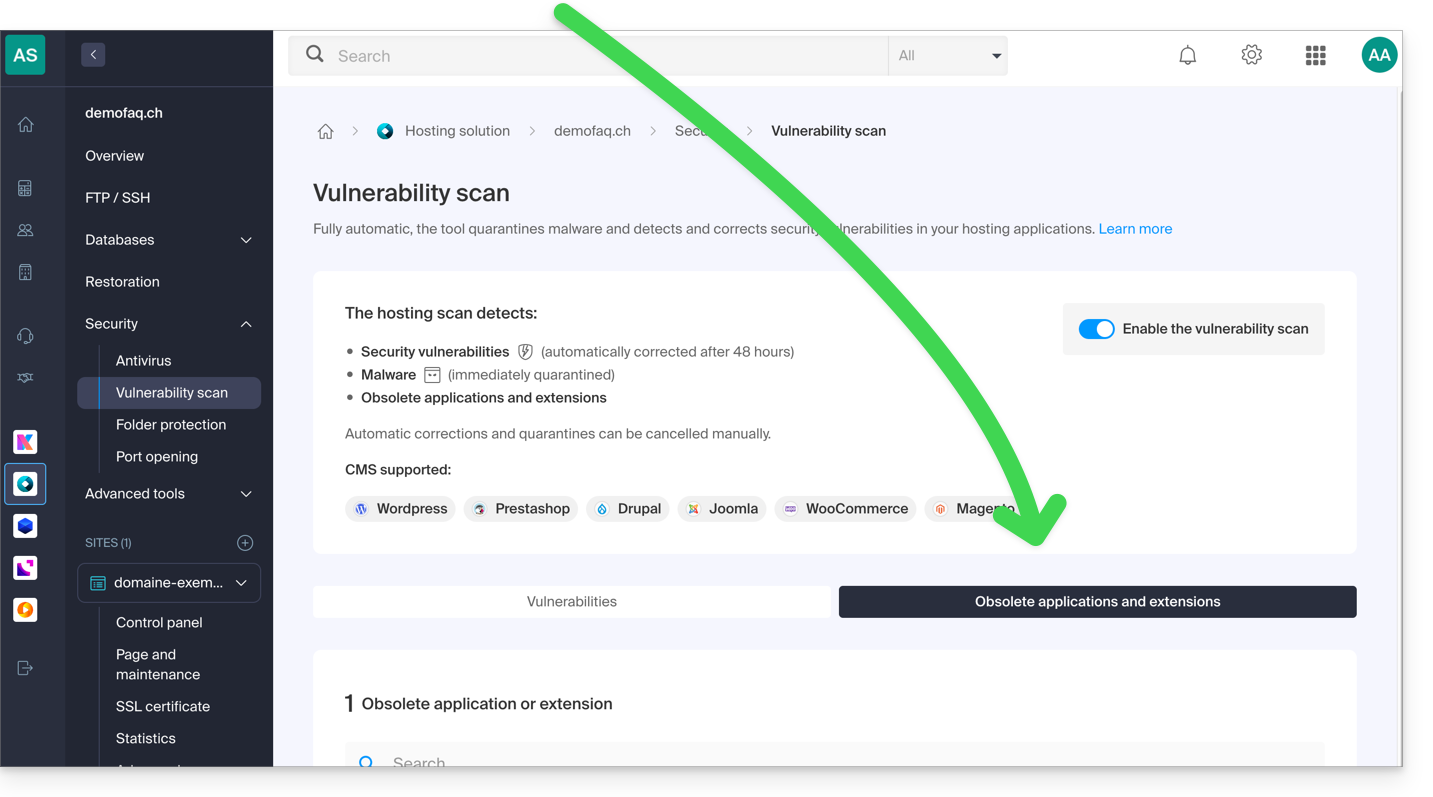
Data Privacy
Like Infomaniak, the tool complies with the European Union's General Data Protection Regulation (GDPR): analyses are performed locally on Infomaniak's servers. The content or signatures of scanned files are not transmitted outside of the infrastructure.
In accordance with the privacy policy, the data processed is limited to the strictly necessary information and includes the username, email address, path, and file names, primarily to communicate detections to the customer.
Link to this FAQ: https://faq.infomaniak.com/2326
Has this FAQ been helpful?