Knowledge base
1000 FAQs, 500 tutorials and instructional videos. Here, there are only solutions!
Manage a user's permissions within an Organization
Update 09/28/2026
This guide explains how to modify the role and permissions of a user so that they only have a limited legal role or access to only certain features of your Organization within the Infomaniak Manager.
Introduction
- Since you opened your account with Infomaniak, you have been part of at least one Organization (❓: help).
- If you were the only user and it wasn't an invitation, an Organization was created in your name, and you automatically become its legal representative.
- Otherwise, you belong to the Organization that invited you (to join its kSuite, to manage a product, etc.).
- You can define whether a user…
- … belongs to your Organization and whether they should have the role of:
- Legal representative
- Administrator
- Collaborator
- … is external to your Organization (limited rights):
- External users are not taken into account in calendar and address book sharing for the entire Organization.
- … belongs to your Organization and whether they should have the role of:
Modify a user's rights/permissions
Prerequisites
- If you cannot find the expected list of users, first switch to the desired Organization (❓: help).
- You must be an Administrator or Legal Representative within the Organization (❓: help).
- Familiarize yourself with the variouspermissions (e.g., access rights to products) and administrative contact preferencesfor a user within an Organization (❓: help).
- Please note that it is not possible to remove a legal representative if there is no other legal representative. (❓: help).
To change a user's role:
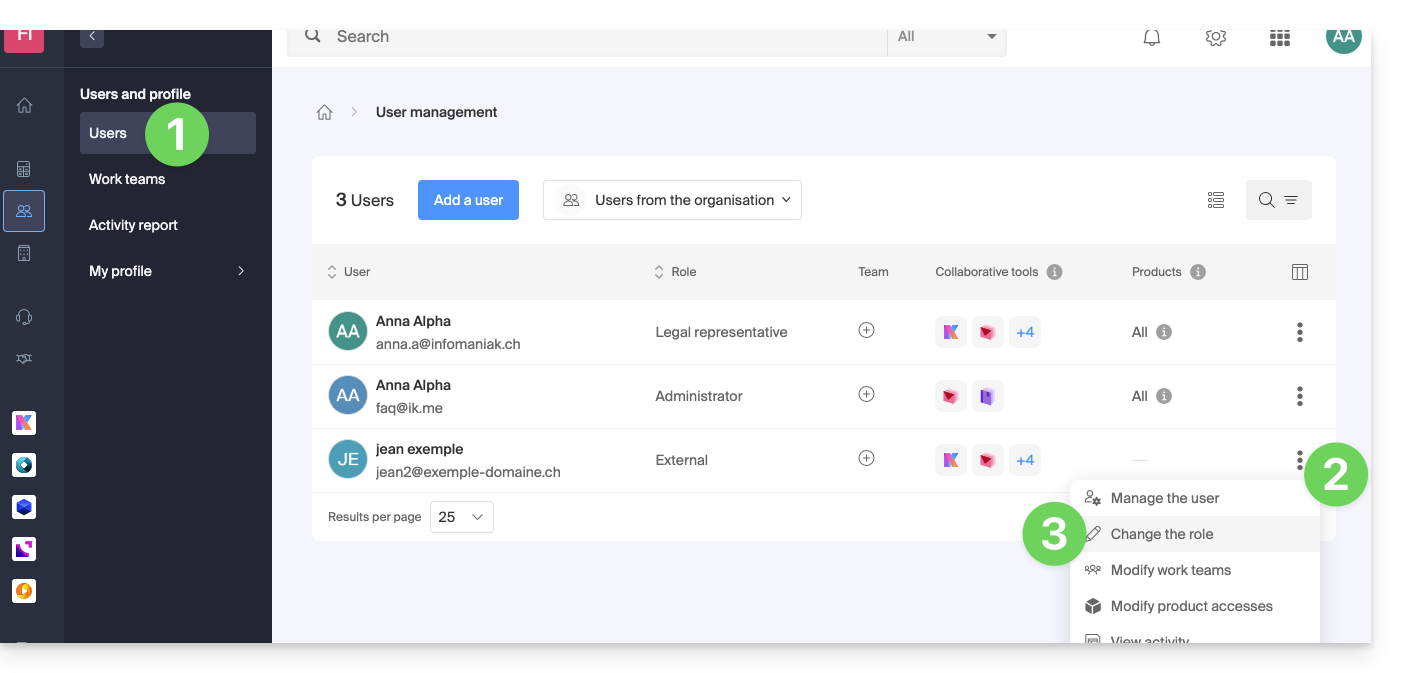
- Click here to access user management in the Infomaniak Manager (❓: help).
- Click on the action menu ⋮ located to the right of the user in question.
- Click on Edit role:
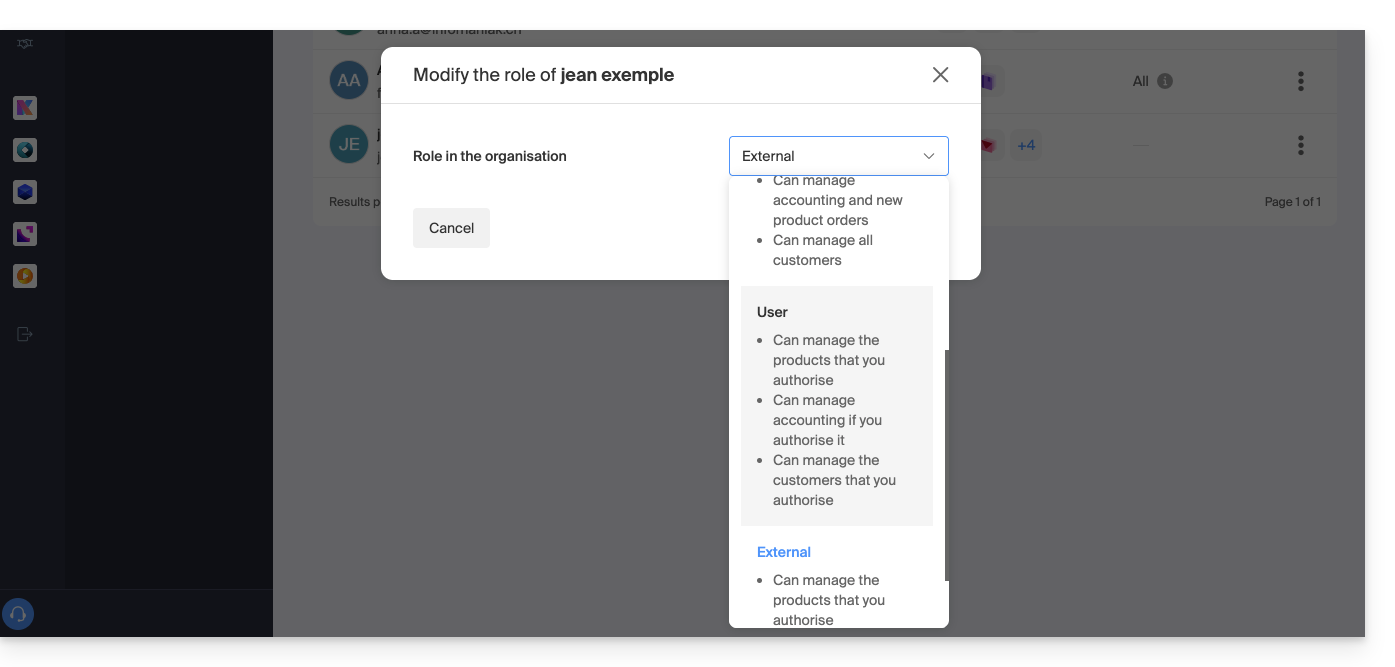
- Edit the desired role:
- Click the Save button.
A summary email is sent to the user whose role has been modified.
If you assign the user a simple collaborator role…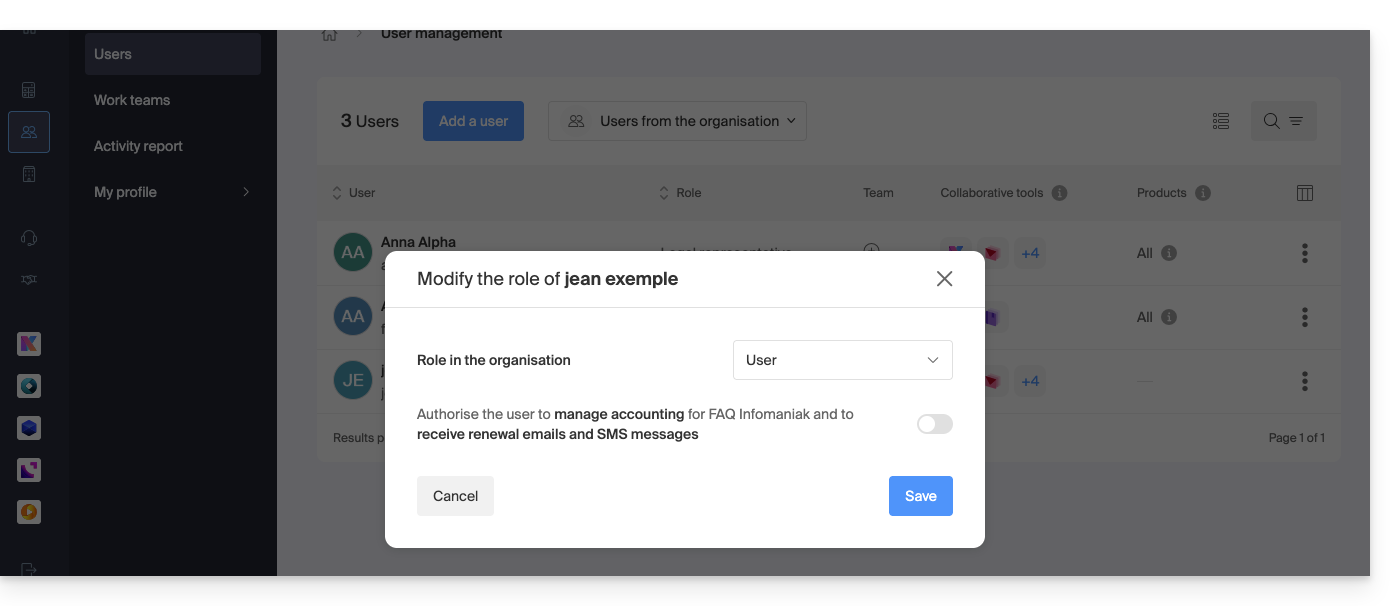
… you can modify the services they can access (❓: help):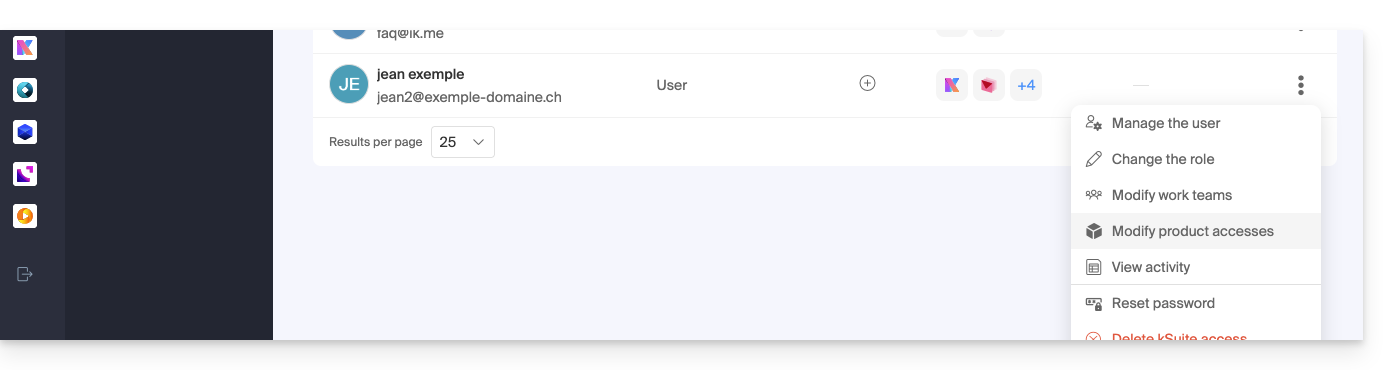
Link to this FAQ: https://faq.infomaniak.com/1633
Has this FAQ been helpful?